Tanzania Safari Journal
The Best Time to Visit the Serengeti (And Why "Migration Season" Is the Wrong Question)
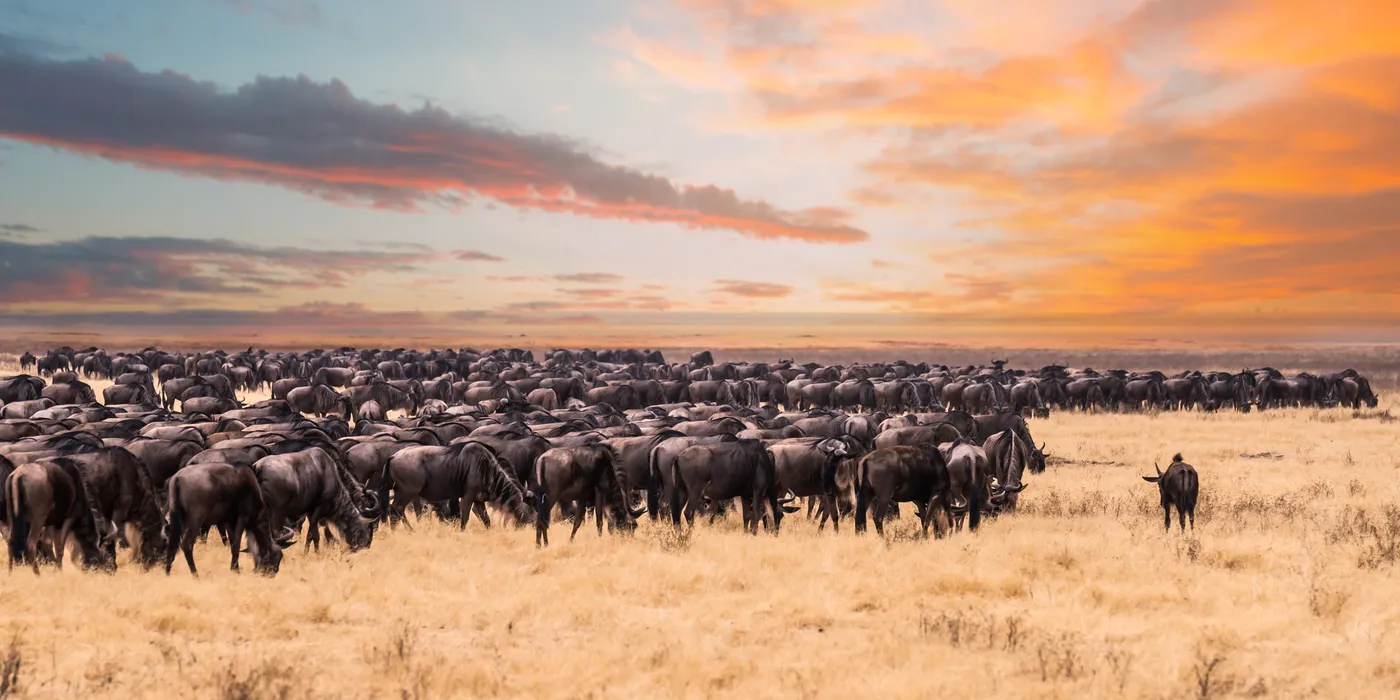
“When is migration season?” is the first question almost every traveler asks. It’s the wrong one. The wildebeest migration is in the Serengeti year-round — they live there. The question you actually want answered is: where in the Serengeti will the herds be when I visit, and is that the part of the park I want to be in?
This guide walks through the calendar month by month, with our honest take on what each season offers and which months we’d pick if we were planning our own trip.
Quick answer
- Late June to early July — herds usually moving through the western/central Serengeti, perfect weather, river crossings start
- February — calving season in the southern Serengeti, predator action is at its peak, fewer crowds
- October — dry, dusty, animals concentrated around water, herds returning to the south
Avoid: late March through early May (long rains, weather risk).
How the migration actually works
The migration is a 1,500-mile annual circuit driven entirely by rainfall and grass. Roughly 1.5 million wildebeest and 200,000 zebra follow the rains. The cycle:
- December to March: Herds gather in the southern Serengeti (Ndutu area) for the calving
- April to May: Herds drift west and north as the short grass dries up
- June to July: Mass movement north toward the Grumeti and Mara Rivers
- August to October: Most herds in the northern Serengeti / Maasai Mara, river crossings happen
- November: Short rains push herds back south
- December: Herds re-gathering in the south
So at any moment, you can find wildebeest somewhere in the Serengeti. The question is where, and whether your lodge is in that part of the park.
Month by month
January
Herds gathering in the southern Serengeti and Ndutu area. Calving season builds — by late January, around 8,000 calves are born per day. Predator action follows: lions, cheetahs, and hyenas. Short rains usually wrapping up. Mid-range pricing — neither peak nor shoulder.
Verdict: Strong month. Less crowded than July-October. Stay at Karibu Woodlands Camp at Naabi Hill in the southern Serengeti — positioned exactly where the calving herds gather. Ndutu Safari Lodge is the closest alternative.
February
Peak calving. If you want to see predators hunt, this is the month. Photographers love February — overcast skies, dramatic light, baby animals everywhere. Weather is warm with occasional afternoon thunderstorms.
Verdict: Our quiet favorite. Underbooked relative to its quality.
March
Calving winds down, herds start drifting. Long rains arrive late in the month. Game viewing still excellent in the south.
Verdict: Good through mid-March. After that, the weather gets unreliable.
April
The wettest month. Many camps close for renovations. Roads become impassable in places. The migration is mid-circuit — neither here nor there.
Verdict: Skip unless you want empty parks and don’t mind weather risk. Pricing is at its lowest.
May
Long rains taper. Herds moving through the western corridor toward the Grumeti. Landscape is the greenest it’ll be all year — striking for photography. Crowds are minimal.
Verdict: Underrated. May is a great pick for travelers who want value and don’t mind some rain. Karibu Sametu Camp in the central Serengeti makes a good base — positioned to catch herds drifting west.
Want help choosing your month?
Tell us what you most want to see — migration crossings, calving, big cats, fewer crowds — and we'll point you to the right month and region of the Serengeti.
Request a quoteJune
The dry season starts. Herds heading north — early June they’re often in the western corridor, late June they may be reaching the Grumeti River for the first river crossings. Excellent month.
Verdict: First-tier choice. Weather is dependable, herds are dramatic, crowds are building but not yet at peak. Karibu Sametu Camp in the central Serengeti is well-placed to catch herds passing through; by late June, consider moving north to Karibu Mara River Camp to position for the first crossings.
July
Peak season starts. Herds in the northern Serengeti or crossing the Grumeti. River crossings begin in earnest. Weather is dry and cool (mornings in the 50s°F).
Verdict: First-tier, with a caveat — book lodges 9-12 months out or you’ll get scraps.
August
Peak crossings on the Mara River in the northern Serengeti. The crossings are unpredictable — herds can stand on the riverbank for hours, then go, then come back. Camps near the river are the play. Lodges are full and expensive.
Verdict: Iconic, but it’s the most crowded month and the most expensive. Worth it once. Stay at Karibu Mara River Camp — 10 minutes from the river and well-placed to be on a crossing within hours of it happening.
September
Same general pattern as August — herds in the north, crossings, dry weather. Slightly less crowded as kids return to school. Some camps offer better rates.
Verdict: First-tier choice. We often steer travelers here over August. Same play as August — base at Karibu Mara River Camp in the north.
October
Hot, dry, dusty. Herds starting to drift back south. Water becomes scarce, which concentrates animals around the few remaining sources — fantastic game viewing in unexpected places.
Verdict: First-tier choice. Often our top pick for travelers who want a less hectic safari.
November
Short rains begin. Herds re-gathering in the south. Landscape turns green almost overnight. Crowds drop sharply after the first week.
Verdict: Good value month with rapidly improving game viewing as the month progresses.
December
Herds settled back in the southern Serengeti. Christmas/New Year is peak pricing for two weeks, very quiet either side. Calving prep underway.
Verdict: Avoid Dec 23 to Jan 2 unless money is no object. The rest of December is excellent value.
Migration location by month
Quick reference for where the herds are likely to be:
| Month | Region | Why |
|---|---|---|
| Dec–Mar | Southern Serengeti / Ndutu | Calving, short grass plains |
| Apr–May | Central / Western | Drifting north with the rains |
| Jun–Jul | Western Corridor / Grumeti | Heading to the rivers |
| Aug–Oct | Northern Serengeti / Mara | Mara River crossings |
| Nov | Eastern Serengeti | Short rains pushing south |
What about weather?
The Serengeti sits around 5,000 feet of elevation. Daytime temps in the dry season are mid-70s°F; nights drop to the 40s and 50s. Wet season is warmer overall, with afternoon thunderstorms rather than all-day rain. There is no “too hot” season — this is not equatorial lowland.
Mornings on game drives can be genuinely cold from June to September. Pack a fleece and a windproof layer. Sunglasses every month.
What about crowds?
Peak crowds: late June through early October, plus Christmas week. “Crowds” in the Serengeti means you might see 10-15 vehicles at a lion sighting in the busy areas. The northern Serengeti and outlying concessions stay much quieter. Mobile camps in less-trafficked corners (Loliondo, Kogatende, the Western Corridor) feel remote even in peak season.
If you want a truly empty park, February or November are the answer. Same wildlife, fraction of the people.
Our honest pick
If a US-based traveler asks us “when should I go” with no constraints, the answer we give most often is late June or early October. June gets you river crossings starting up with better weather and slightly lighter crowds than July. October gets you the most dramatic game viewing of the year, concentrated around water, with lower prices than mid-summer.
If you have flexibility, ask us — there are always reasons we’d nudge you one way or another based on what you actually want to see.
[AFFILIATE_OPERATOR_PRIMARY] | [AFFILIATE_OPERATOR_MIDRANGE]
Plan this trip with us
Send us your dates and we'll match you with one of our vetted Tanzania operator partners. Custom quote within one business day.
Request a quote